

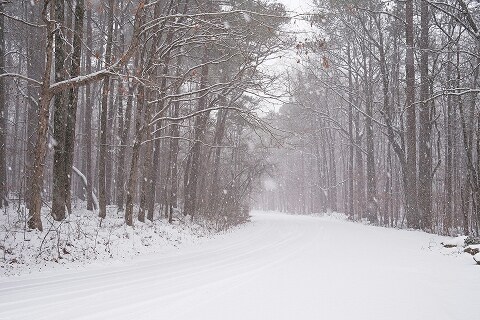
You're on Route 9 at 6:45 on a cold morning. The road looks merely wet, but your car feels a little loose when you touch the brakes. Plenty of drivers tell us about moments like that every fall when they ask about snow tires. The benefits of using snow tires in Massachusetts show up on everyday commutes as well as during big storms.
If you're planning for the 2026-27 winter, explore tire options for your Subaru now. Our team in Natick can help you sort out what fits your car and your routes.
Why Snow Tires Matter on Massachusetts Roads
Massachusetts winter driving involves more than fresh snowfall. Freezing rain, slush and packed snow can change your traction several times during one trip, and moisture refreezes after dark. Snow tires are built for sustained cold and winter road surfaces, so they matter on ordinary early-morning and evening commutes too.
Tires are one part of winter preparedness. Even with snow tires, you still need to watch your speed, leave following distance, keep your windows clear, and steer and brake smoothly.
How Route 9, the Mass Pike, and I-95 Challenge All-Season Tires
Commute on Route 9, the Mass Pike, or I-95 and you'll meet the same general winter hazards. Bridge decks freeze before approach roads do, and exit ramps may get less anti-icing material than the main roadway. Adverse conditions increase both stopping time and stopping distance.
MassDOT reminds drivers that posted speed limits are for dry pavement, so leave extra room and brake early. The MassDOT winter-driving vehicle checklist also includes snow tires, tire tread, and tire pressure. All-season tires balance year-round needs, while snow tires prioritize low-temperature flexibility and traction, which helps a lot on these roads.
How Snow Tires Work: Rubber Compound, Tread, and Sipes
The first feature is the rubber. The compound in snow tires stays flexible below 45°F, while regular compounds harden and lose grip.
Tread comes next. Deep lugs push slush out of the way, and aggressive grooves channel snow and water away from the contact patch. That helps, but it doesn't eliminate hydroplaning.
Sipes, the small cuts across the tread blocks, finish the job. Higher sipe density adds biting edges that support grip when you accelerate and brake.
When shopping, look for the Three-Peak Mountain Snowflake (3PMSF) symbol. It indicates tested severe-snow performance. M+S alone doesn't make a tire a good snow tire, and it can appear on all-season tires.
Benefits of Using Snow Tires in MA
Snow tires give you a greater margin of control under suitable conditions. They won't let you drive faster, and they can't guarantee you'll avoid a collision. Speed and tire condition still matter, as does vehicle load.
Stronger Grip on Ice, Slush, and Packed Snow
Snow tires help on ice more than all-season tires do, because pliable rubber conforms to uneven surfaces and sipes bite into slick spots. Better grip can also mean less wheelspin when you pull away from a stop and more controlled progress on snow-covered roads.
Shorter Stopping Distances in Cold Temperatures
Snow tires can shorten stopping distances in freezing conditions compared with conventional all-season tires. Results still vary by tire, vehicle, surface, temperature, and speed. A cold day alone doesn't guarantee that every snow tire stops shorter on every surface.
Better Cornering, Steering Response, and Control
Flexible rubber and dense siping, along with aggressive grooves, give better cornering grip and more predictable handling in cold, snowy conditions. You still need to slow before turns and avoid abrupt moves.
Snow Tires vs. All-Season Tires on Black Ice and Unplowed Roads
All-season tires can handle some light winter weather, but their broad operating range involves compromises. The table below compares the main tire types by qualitative traits.
| Tire Type | Cold-Weather Rubber | Tread Design | Ice and Snow Grip | Best Use |
|---|---|---|---|---|
| All-season | Compound stiffens below 45°F | Built to balance conditions | Meets minimum snow-traction standards | Acceptable where little snow falls |
| Winter, car and crossover | Stays pliable in freezing temperatures, with silica in the compound | Tightly spaced tread blocks and many small incisions | Strong grip on snow and frozen spots | Snowy highways and plowed roads with frozen spots |
| Winter, truck and off-road SUV | Sometimes slightly harder, but still softer than all-season | Sometimes wider tread gaps | Best in unplowed snow, not quite as grippy on plowed roads as ice-oriented winter tires | Unplowed snow |
On black ice, snow tires are designed to be more effective, so you can brake and accelerate with more control, and steer with it too. Black ice remains challenging for any tire, though. On unplowed roads, the tread helps in loose and packed snow, but traction isn't ground clearance. Tires can't free a vehicle that is high-centered.
Pairing Snow Tires With Subaru Symmetrical All-Wheel Drive
Subaru Symmetrical All-Wheel Drive is full-time AWD on nearly every Subaru. It provides extra traction and stability when it detects slippage. Still, AWD gets you moving while your tires determine how well you stop and turn.
AWD helps a vehicle accelerate on snow. It does nothing for stopping or turning, and it won't shorten stopping distance. Confident acceleration can hide weak braking grip. Stability control, traction control and ABS all work within the grip your tires provide. Subaru vehicles have four-wheel ABS, but it can't create traction that isn't there.
Subaru's winter habits still apply with snow tires. Go easy on the throttle and brakes, take turns slowly, and brake early.
As general guidance, keep all four tires matched in size and tread depth to protect the AWD system. Check your owner's manual for your model's requirements. Questions about your setup? Contact us and we'll help.
Are Snow Tires Worth the Cost?
Whether they're worth it depends on your exposure. If you travel often in the cold, can't avoid certain commutes, or deal with recurring ice, the benefits matter more. When you look at snow tire cost, factor in safety and the risk you avoid along with the purchase price. Ask for a full quote that includes installation and balancing.
Wear matters too. Alternating two sets slows wear on each. Snow tires soften and wear fast in warm weather and feel heavy, so they come off in spring. Tire life varies with mileage, alignment, inflation, and driving habits, so no one can promise a set number of winters.
Why a Full Set of Four Matters
Fitting snow tires only to the powered wheels can cause uneven wear and earlier replacement. It also creates unequal grip between front and rear. One end of the car may hold while the other slides, which makes braking and cornering less predictable. Traction at the non-driven wheels still affects stability and steering, so a matched set of four is the safer choice.
When to Switch to Snow Tires and How to Choose the Right Set
Install them when average daily temperatures consistently approach 45°F, and switch back when spring returns. Treat that as a general guideline, since the right date shifts from year to year. For the 2026-27 winter, plan the swap before the first significant snowfall.
Signs it's time to switch:
-
Daily temperatures are steadily approaching 45°F.
-
You're seeing frost on the windshield in the morning.
-
Your commute starts or ends in the cold and dark.
Worn tires reduce your ability to stop or get going in snow. Snow tires need deeper tread than all-season tires, and 6/32 of an inch is the replacement point.
Choosing depends on vehicle type and weight, plowed versus unplowed roads, and local weather. Questions to ask before you buy:
-
Does the size match my vehicle?
-
Does it carry the 3PMSF marking?
-
What is the tread depth?
-
Should I buy a full set?
Care note: check tire pressure as temperatures drop, using the pressure on your vehicle's placard. Store the off-season set clean and wrapped, indoors in a dry spot. Each set stays on its own rims, which makes swaps easier.
Get Snow Tires From MetroWest Subaru in Natick
Wondering where to get snow tires in Massachusetts? Visit us at 948 Worcester Road, Route 9 East, Natick, MA 01760. We serve drivers in Wellesley, Brookline and Norwood too. Our service team handles tire rotations, mounting and balancing, wheel alignments, and snow tire swap-outs.
-
Confirm the right tires for your Subaru and your usual routes.
-
Ask about AWD tire-matching guidance for your model.
-
Plan ahead so you're ready before winter weather arrives.
Shop Subaru tires in Natick, visit our Service Center, or schedule service. Thinking about a new Subaru before winter? Browse new vehicles. Contact us to ask about snow tire options for your Subaru.
FAQs About Snow Tires in MA
Do I need snow tires if I have AWD? AWD helps you get going, but tires decide how well you stop or turn, so snow tires still add value.
Are snow tires necessary? It depends on how much cold, ice, and snow you drive in. Frequent winter commuting makes them more useful.
Are snow tires and winter tires the same? Generally, yes. Both terms mean the same cold-season tire. All-season tires are a different compromise.
Can I leave winter tires on in warm weather? It's not ideal. Warm pavement wears them down fast and they feel heavy, so take them off in spring.
How many snow tires do I need? Four. A matched set keeps grip balanced and protects your AWD system.